


Stock Code
002255




For industrial facilities with high and continuous steam demand, choosing a boiler is not simply about achieving greater output. Buyers also need to consider fuel availability, operating costs, emission requirements, and long-term reliability. A large capacity coal fired CFB boiler can be a practical option for suitable industrial applications, but its performance depends on how well the system matches the facility’s actual operating needs.
Before investing in a large industrial boiler, it is important to understand the challenges that affect efficiency, production continuity, and overall operating costs.
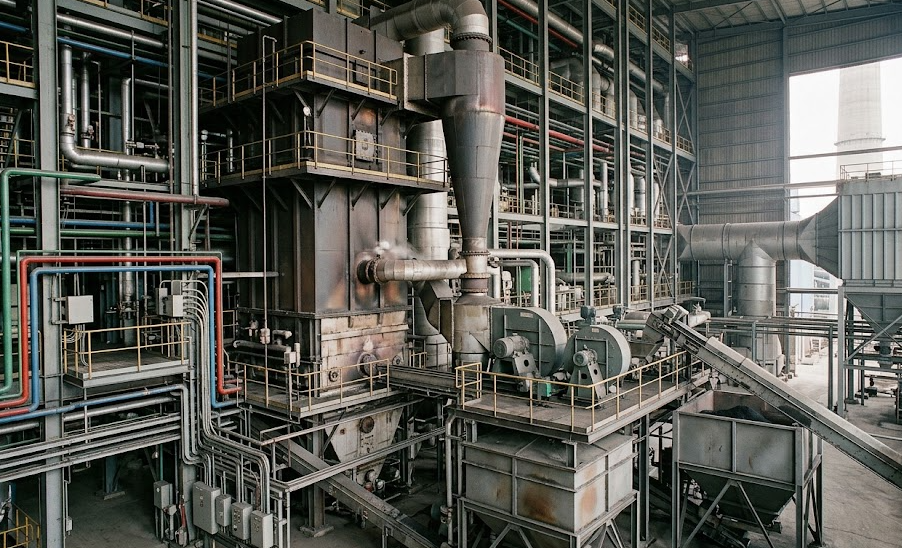
One of the first challenges for industrial buyers is ensuring a stable steam supply during both peak production and normal operation. Insufficient capacity may affect manufacturing schedules, while an oversized boiler can increase initial investment and operating expenses.
When evaluating a large capacity coal fired CFB boiler, consider more than its rated evaporation capacity. Review the required steam pressure and temperature, daily operating hours, seasonal demand changes, and expected future production growth.
The boiler should also work efficiently under the facility’s typical load conditions. A system designed around real operating requirements can help reduce unnecessary fuel consumption and support more consistent production.
Coal quality and availability can vary by supplier and region. Differences in calorific value, moisture, ash content, and sulfur content may affect combustion performance, maintenance requirements, and emissions.
Circulating fluidized bed (CFB) combustion offers fuel flexibility in appropriately designed systems. Air suspends and circulates fuel and bed materials, helping maintain effective fuel-air contact and combustion. However, fuel flexibility does not mean every coal type can be used without adjustment.
Before selecting a boiler, buyers should provide representative fuel analysis and confirm the acceptable fuel range with the manufacturer. Matching the combustion system to the available fuel can help avoid unstable operation, excessive ash handling, and unexpected maintenance costs.
For facilities operating boilers for long periods, fuel expenses are only one part of the total cost. Auxiliary electricity consumption, maintenance, emissions treatment, and unplanned downtime can also affect the overall economics.
A well-designed CFB system can support effective combustion and, under suitable operating conditions, sulfur capture through the addition of limestone or another appropriate sorbent. However, actual results depend on fuel characteristics, boiler design, operating parameters, and the emissions-control equipment installed.
Buyers should therefore evaluate the complete boiler system rather than relying on a single efficiency figure. Key questions include:
● Does the design meet local emission standards and permit requirements?
● What fuel and auxiliary power consumption should be expected under normal operating conditions?
● Are ash removal and emissions-control systems suitable for the planned workload?
● What maintenance tasks and consumable materials will be required?
Requesting performance guarantees and clearly defined testing conditions can make supplier comparisons more meaningful.
For continuous-production industries, unexpected boiler shutdowns can disrupt operations and increase costs. A large-capacity system must therefore be evaluated for maintainability as well as output.
Important considerations include the wear resistance of components exposed to circulating solids, ash-handling arrangements, refractory condition, access to inspection points, and the availability of replacement parts. Monitoring steam pressure, bed temperature, oxygen levels, and other operating parameters can also help operators identify abnormal conditions earlier.
Buyers should discuss maintenance intervals, technical support, spare-parts availability, and operator training before finalizing a purchase. These practical details can have a significant impact on long-term equipment availability.
The right boiler depends on the facility’s steam demand, fuel supply, site conditions, environmental requirements, and budget. Comparing suppliers only by rated capacity or initial price may overlook costs that emerge during years of operation.
As an industrial equipment provider, Hailu Heavy Industry offers boiler-related products and engineering services alongside pressure vessels and environmental engineering capabilities. When evaluating a project, buyers can discuss their operating requirements with the supplier to determine an appropriate system configuration.
Prepare key information before requesting a proposal, including required steam output, pressure and temperature, fuel analysis, annual operating hours, emission limits, and installation conditions. This allows suppliers to assess the application more accurately and recommend a solution suited to the project.
A large capacity coal fired CFB boiler should be selected according to the demands of the entire industrial process, not capacity alone. Fuel compatibility, steam stability, emissions compliance, maintenance access, and lifecycle costs all influence its long-term value.
By defining these requirements early and comparing complete system performance, industrial buyers can make better-informed investment decisions and reduce the risk of costly operational problems.