


Stock Code
002255




In many heavy industries, a large amount of heat is produced as part of normal production. Hot flue gas from furnaces, kilns, reactors, smelting equipment and other processes can leave the production system at a high temperature. If this heat is simply discharged, valuable energy is lost.
An industrial waste heat recovery boiler provides a way to put part of that energy back to work.
Instead of relying mainly on additional fuel to produce steam, a waste heat boiler uses heat that already exists in the industrial process. The recovered heat can be used to produce steam for production, heating or power generation, depending on the plant design.
For modern factories, this is not only an energy-saving project. It can also become an important part of overall plant efficiency and operating cost control.
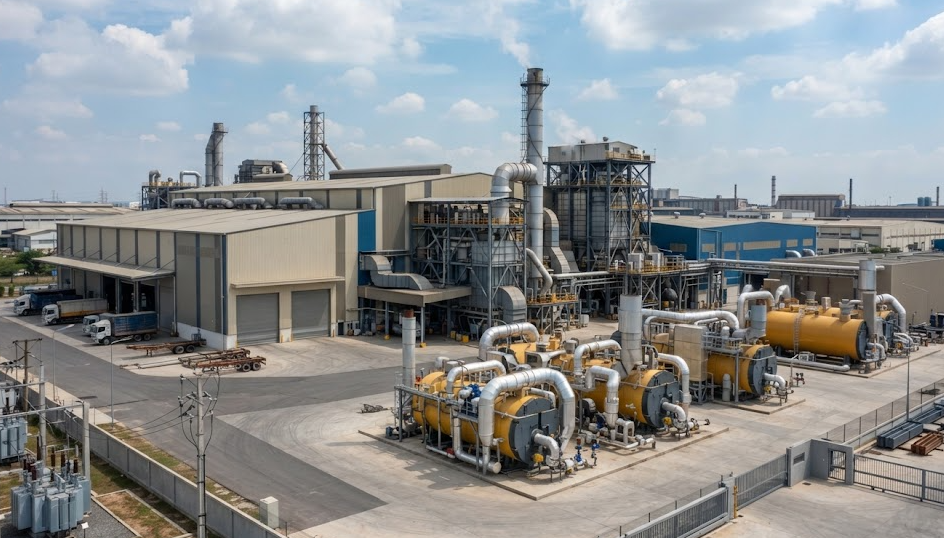
One of the most important points when selecting a waste heat recovery boiler is that industrial waste heat varies greatly from one process to another.
A steel plant, refinery, sulfuric acid plant and non-ferrous metal smelter may all have high-temperature gas, but the gas temperature, flow rate, dust content, chemical composition and operating pattern can be very different.
These differences directly affect the boiler design.
For example, gas containing a large amount of dust may create fouling or erosion problems. Gas containing corrosive components can create material and corrosion concerns. A process with frequent temperature changes also places different demands on the boiler than a process running under stable conditions.
This is why an industrial waste heat boiler should be designed around the actual production process rather than selected simply from a standard product list.
Hailu Heavy Industry's waste heat boiler business covers different industrial applications, including coke dry quenching, non-ferrous metal smelting, petrochemical catalytic cracking, hydrogen production, reheating furnaces, sulfur units, sintering, steel converters and electric furnaces, as well as heat recovery steam generators for combined-cycle systems.
A common way to evaluate a waste heat boiler is to look at how much steam it can produce. That is important, but it is only part of the picture.
The real value comes from how well the boiler fits into the complete production system.
Recovered steam may be used directly in a plant's process or sent to other equipment. In some projects, high-pressure steam can also support power generation, improving the overall value of the recovered heat.
Hailu's sulfuric acid waste heat recovery systems, for example, include waste heat boilers, superheaters and economizers. Its published project data includes systems producing high-pressure steam, with some designs reaching 9.8 MPa and 540°C.
This shows why a high pressure waste heat boiler should be considered as part of a larger energy system rather than as an isolated boiler.
The application range is broad.
Steelmaking creates large amounts of high-temperature gas and secondary heat. Waste heat recovery can turn part of this energy into useful steam instead of allowing it to disappear from the process.
However, steel plant gases can contain substantial dust and may experience major temperature and flow changes. Equipment therefore needs to be designed for the actual steelmaking process.
Hailu provides waste heat boiler solutions for steel converters, electric furnaces, sintering and other steelmaking applications.
Refineries also provide strong opportunities for heat recovery.
Fluid catalytic cracking, for example, produces hot flue gas containing both heat and process-related materials. A properly designed FCC waste heat boiler can recover this energy and produce useful steam.
The operating environment can also be challenging because catalyst particles can cause erosion, while process gases may create corrosion and fouling concerns. Hailu specifically develops waste heat boilers for FCC and CO-rich flue gas applications.
Chemical production is another important area for waste heat recovery.
Sulfur-based sulfuric acid plants can generate significant quantities of heat that can be recovered through boilers, superheaters and economizers. Hailu reports applications ranging from smaller sulfur recovery systems to large sulfuric acid plants, with project capacities extending to more than 100 t/h of steam in some installations.
For these plants, heat recovery is closely connected with the overall process design, so equipment selection needs to consider both steam requirements and gas conditions.
Copper and other non-ferrous metal smelting processes also produce high-temperature process gases.
A waste heat boiler for copper smelting can recover part of this thermal energy and convert it into useful steam. But dust, fouling, corrosion and changing operating conditions need to be considered during design. Hailu identifies non-ferrous metal smelting as one of its waste heat boiler application areas.
There is no single waste heat boiler that fits every industrial plant.
The boiler needs to match the heat source, gas flow, temperature range, pressure requirements and downstream equipment. The expected operating conditions also matter because the equipment may run continuously for thousands of hours each year.
This makes the experience of the waste heat recovery boiler manufacturer particularly important.
A good supplier should be able to understand the complete process instead of looking only at the boiler itself.
Hailu states that its waste heat boiler business provides design, installation, operation and EPC services for complete waste heat recovery plants. This allows the boiler to be considered together with other equipment in the recovery system.
When purchasing an industrial waste heat recovery boiler, buyers should prepare detailed process information before asking for a quotation.
The first consideration is the heat source. What equipment produces the waste gas? What is the normal and maximum gas temperature? How much gas is produced?
Next, look at gas composition and dust content. These factors can affect material selection, cleaning requirements and long-term operating reliability.
Steam requirements are equally important. The required steam pressure, temperature and production rate should be clearly defined.
The plant's operating pattern should also be considered. A boiler designed for stable operation may need a different approach if the heat source changes frequently.
Finally, buyers should consider maintenance and service. A recovery system may operate for many years, so accessibility, spare parts, technical support and engineering capability can have a major effect on the long-term value of the investment.
Hailu Heavy Industry has been involved in energy-saving and environmental protection equipment for decades. The company was founded in 1956 and has developed business covering boilers, pressure vessels, nuclear power equipment and environmental engineering. Its waste heat boiler products serve more than 30 industries and have been exported to more than 80 countries and regions, according to the company's profile.
Its manufacturing capabilities also support large industrial equipment. The company reports a production workshop of about 45,000 square meters, large lifting equipment, heat treatment facilities, thick-plate rolling capability and non-destructive testing equipment, with an annual production capacity of 20,000 tons.
For large industrial projects, these capabilities matter because a custom waste heat recovery boiler is often a major piece of equipment rather than an off-the-shelf purchase.
The best waste heat recovery project is not necessarily the one with the largest boiler or the highest steam output.
It is the one that makes the best use of the available heat while fitting safely and reliably into the production process.
A successful project should consider the heat source, gas conditions, steam demand, equipment life, maintenance requirements and the complete recovery system.
For steel plants, chemical plants, refineries, smelting facilities and other energy-intensive industries, recovering heat that would otherwise be lost can turn an unavoidable production byproduct into a useful source of energy.
That is the real purpose of an industrial waste heat recovery boiler: not simply to produce steam, but to make better use of energy that the factory is already generating.