


Stock Code
002255




In energy-intensive industries, improving energy efficiency requires more than capturing waste heat. The real challenge is converting available thermal energy into useful steam while maintaining stable production, controlling operating costs, and ensuring equipment reliability.
A custom heat recovery steam generator (HRSG) is designed around the heat source, gas characteristics, steam requirements, and operating conditions of a specific industrial process. For steelmaking, metal smelting, petroleum refining, and chemical production, customized engineering helps improve heat utilization while addressing application-specific challenges.
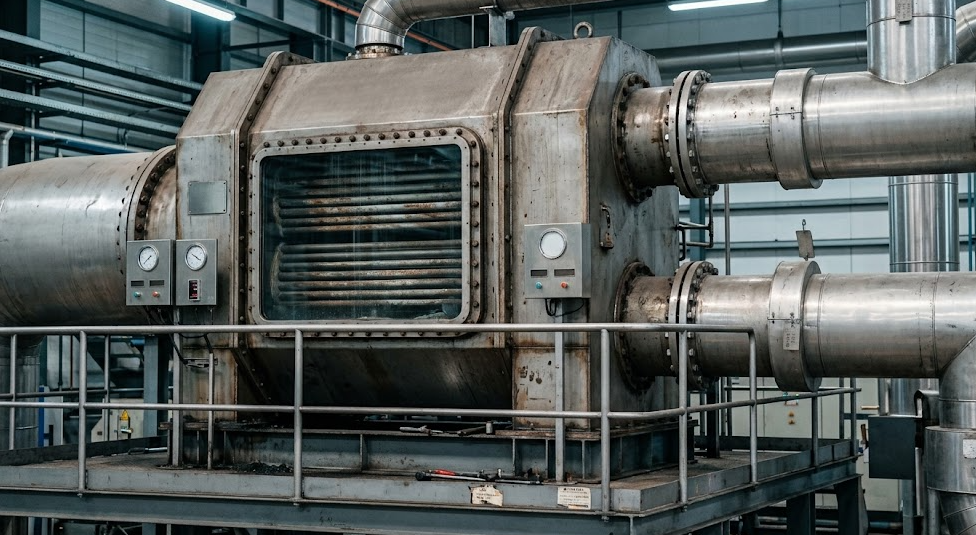
The performance of a custom heat recovery steam generator depends on the characteristics of the incoming gas. Temperature alone cannot determine the amount of recoverable energy.
Engineers should evaluate:
● Gas temperature and flow rate: Establish the available thermal energy and potential steam output.
● Gas composition: Identifies corrosion risks and material requirements.
● Particulate concentration: Influences fouling, erosion, and maintenance needs.
● Outlet temperature: Helps define practical recovery limits and avoid undesirable condensation.
● Steam requirements: Determine the required pressure, temperature, and production capacity.
Reliable operating data provides the foundation for accurate heat-balance calculations and realistic performance expectations.
Optimizing thermal yield involves balancing heat-transfer performance with pressure drop, equipment durability, and maintenance requirements.
● Heat-transfer design: The arrangement and size of heat-transfer surfaces affect how efficiently energy moves from hot gas to boiler water. Gas velocity, tube spacing, and available installation space must be considered together.
● Fouling and erosion control: Dust and deposits can reduce heat transfer and increase gas-side resistance. Depending on the process, the design may require appropriate gas velocities, cleaning provisions, and convenient inspection access.
● Corrosion and thermal stress: Certain industrial gas streams can create corrosive conditions, while rapid temperature changes may stress pressure components. Material selection and operating procedures should reflect the actual gas chemistry and temperature cycles.
A well-engineered HRSG considers these factors throughout its service life, not just during initial commissioning.
Industrial processes have different heat recovery requirements, making application-specific engineering essential.
● Steelmaking and coke dry quenching: Recover heat from hot coke and circulating gas while accounting for process conditions and particulate behavior.
● Non-ferrous metal smelting: Manage high-temperature gas, dust loading, potential erosion, and heat-transfer performance.
● Petroleum refining and petrochemicals: Match the boiler configuration to the specific process stream, gas composition, and downstream requirements.
● Sulfur chemical production: Consider gas chemistry, temperature limits, and corrosion risks in sulfuric acid plants and sulfur recovery applications.
Hailu Heavy Industry provides industrial waste heat recovery solutions for applications across metallurgy, petroleum and chemical processing, and other industrial sectors. The appropriate configuration depends on each project's process data and operating requirements.
Recovering heat does not automatically guarantee economic benefits. The generated steam must match the plant's actual needs.
Before selecting a custom heat recovery steam generator, engineers should determine whether the steam will support process heating, plant utilities, or power generation. The required steam pressure, temperature, and flow rate should be established before equipment design.
Feedwater quality, water circulation, control systems, and connections to the existing steam network also require attention. Where production loads fluctuate, the system should be assessed under different operating conditions to ensure that recovered energy remains useful.
A suitable HRSG should be assessed using more than its rated steam capacity. Buyers should review:
● Expected steam output under representative operating conditions
● Gas-side pressure drop and auxiliary energy consumption
● Maintenance access and cleaning requirements
● Equipment availability and corrosion management
● Installation costs and long-term operating expenses
Energy-saving estimates should be based on clear assumptions, including the amount of recovered steam actually used and the energy source it replaces. This provides a more realistic basis for comparing equipment proposals.
Industrial heat recovery projects often involve demanding gas conditions, limited installation space, and specific engineering standards. Buyers should therefore evaluate a manufacturer's design capability, manufacturing quality, and experience with comparable applications.
Hailu Heavy Industry offers industrial waste heat recovery equipment and related engineering services. When requesting a proposal, buyers should provide gas composition, flow rate, inlet temperature, required steam parameters, site constraints, and applicable standards.
These details help the engineering team evaluate the heat balance, identify potential operating risks, and develop a configuration suited to the production process.
Optimizing thermal yield with custom heat recovery steam generators requires accurate process data, balanced heat-transfer design, suitable materials, and effective integration with the plant's steam network.
For industrial facilities, the goal is not simply to recover more heat, but to generate useful steam reliably and achieve practical long-term value. Hailu Heavy Industry provides a starting point for discussing customized waste heat recovery requirements across metallurgy, refining, and chemical processing.