


Stock Code
002255




Waste-to-energy projects face a difficult engineering challenge: the fuel is rarely consistent. Solid waste, refuse-derived fuel (RDF), biomass residues, and other alternative fuels can vary in moisture, particle size, ash content, and heating value. A boiler designed around one fixed fuel condition may struggle when the actual fuel changes.
This is why a Custom Solid Waste CFB Steam Boiler for Waste-to-Energy Plants needs to be designed around the real fuel and operating conditions of the project, rather than simply selecting a standard boiler model.
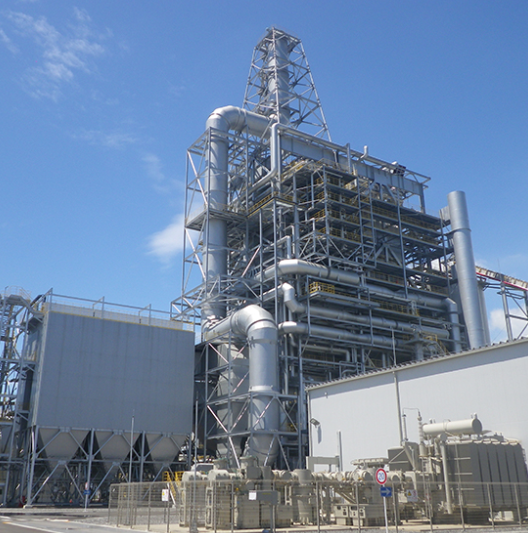
A circulating fluidized bed (CFB) boiler keeps fuel and bed material in continuous circulation through the furnace and solids-recycle system. This creates strong contact between fuel, air, and hot particles, supporting stable combustion across a relatively broad range of fuel conditions.
For waste-to-energy plants, this flexibility is particularly valuable. Modern CFB systems can be designed for fuels such as RDF, biomass, waste-derived fuels, and other solid fuel mixtures. Industry applications demonstrate the ability of CFB technology to handle diverse fuels while producing steam for power generation or industrial use.
The important point is that fuel flexibility does not mean every waste stream can be burned without preparation. The boiler still needs to be engineered around the actual fuel characteristics.
When purchasing a custom solid waste CFB steam boiler, fuel analysis should be one of the first engineering steps.
Moisture affects ignition and the amount of useful heat available. High ash content increases ash-handling requirements and can influence heat-transfer surfaces. Chlorine, sulfur, alkali compounds, and other constituents may affect corrosion, fouling, and emissions-control requirements.
Fuel particle size also matters because feeding and combustion depend on predictable material flow.
For this reason, buyers should provide the boiler manufacturer with representative fuel data, including heating value, moisture, ash, elemental composition, particle-size distribution, and expected variations. Designing from average values alone can create operating problems later.
For a waste-to-energy project, the required steam output should be determined from the complete energy balance rather than simply selecting the largest possible boiler.
The project may require steam for electricity generation, district heating, industrial processes, or a combination of applications. Steam pressure and temperature therefore need to match the downstream steam turbine, heat users, and overall plant configuration.
A well-designed custom CFB steam boiler for waste-to-energy applications should also consider changes in fuel supply and plant load. Stable steam production during changing conditions is often more valuable than achieving a high output under one ideal operating point.
Waste combustion involves more than recovering heat. The fuel composition determines the types of pollutants that may require control, including NOx, SOx, HCl, CO, and particulate matter.
CFB combustion provides opportunities for controlling combustion temperature and using staged air and suitable sorbents, but emission performance ultimately depends on the complete combustion and flue-gas treatment system. Research on CFB combustion of municipal solid waste and RDF shows that operating conditions such as bed temperature and air distribution can influence pollutant formation.
Therefore, a custom solid waste CFB boiler should not be evaluated only by the furnace itself. Cyclones, heat-transfer equipment, ash removal, particulate control, desulfurization, denitrification, and monitoring systems may all form part of the overall solution.
Waste-to-energy equipment operates under demanding conditions. Continuous exposure to ash, corrosive compounds, temperature fluctuations, and high gas-solid flow can affect furnace walls, heat-transfer surfaces, cyclones, and other components.
Material selection and erosion protection therefore deserve attention during the design stage. Maintenance access is equally important. A boiler that performs well but requires difficult shutdown maintenance can create significant operating costs over its service life.
For this reason, buyers should look beyond the initial equipment quotation and ask about inspection points, replaceable components, spare parts, maintenance procedures, and expected operating conditions.
A custom CFB steam boiler manufacturer should be capable of connecting fuel characteristics with boiler design, environmental requirements, auxiliary systems, and plant operation.
Hailu Heavy Industry covers boiler engineering as well as environmental engineering and provides support extending from design and engineering through construction, installation, commissioning, EPC solutions, and long-term operation.
This type of integrated capability is particularly useful for waste-to-energy projects because the boiler cannot be separated from fuel preparation, flue-gas treatment, ash handling, steam systems, and plant controls.
Before requesting a quotation, project owners should prepare detailed information about the waste fuel, required steam output, steam conditions, operating hours, site conditions, emission requirements, and expected future fuel changes.
The goal should be to develop a boiler system that remains stable when real-world conditions change.
For a Custom Solid Waste CFB Steam Boiler for Waste-to-Energy Plants, the strongest solution is not necessarily the most complicated one. It is the system that matches the fuel, produces the required steam reliably, controls emissions effectively, allows practical maintenance, and supports the economics of the entire plant.
With its focus on boiler engineering, environmental systems, and complete project services, Hailu Heavy Industry can provide a project-oriented approach for customers developing solid waste and waste-to-energy facilities.