


Stock Code
002255




The chemical industry stands at a critical juncture. Faced with intensifying global competition, rising energy costs, and stringent environmental regulations demanding significant carbon footprint reductions, chemical plant operators are under immense pressure to optimize every aspect of their operations. While often overlooked, the efficient management of process heat presents one of the single largest opportunities for sustainable gains. This is where the strategic implementation of a high-performance heat recovery boiler for a chemical plant becomes not merely a technical upgrade, but a vital competitive advantage.
Many chemical processes—ranging from basic petrochemical cracked gas cooling to specialized organic synthesis reactions—are inherently exothermic or require substantial heat input, generating vast quantities of high-temperature exhaust gases or process streams. Conventionally, this thermal energy is either wasted (vented to the atmosphere) or inefficiently utilized. Modern engineering, however, demands a more robust and integrated approach.
A properly engineered industrial waste heat recovery boiler does more than just capture heat; it transforms a thermal waste stream into a valuable resource, typically by generating steam for power generation, process heating, or driving auxiliary equipment. The selection and integration of this technology are complex, requiring deep industry-specific expertise, particularly in demanding chemical environments.
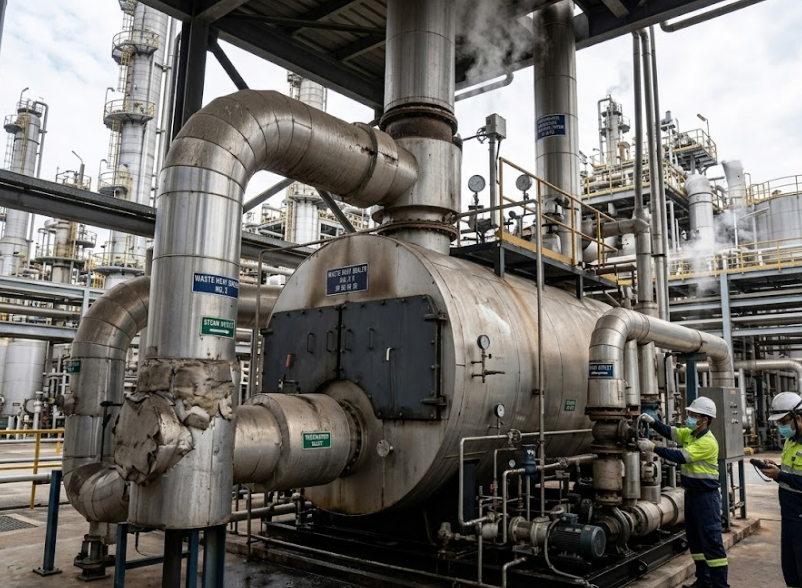
Unlike standard power generation applications, the chemical industry presents unique challenges for heat recovery. The process gases involved are often corrosive (containing sulfur compounds, chlorides, or organic acids), heavily laden with particulate matter, and can be subject to significant pressure and temperature fluctuations. Therefore, a generic, off-the-shelf heat recovery system is rarely a viable solution.
To achieve maximum effectiveness, the design must prioritize the distinct characteristics of the specific chemical process. For instance:
In processes such as sulfuric acid production or FCC (Fluid Catalytic Cracking) unit regenerator gas cooling, the waste heat is extremely hot and often carries corrosive components. A generic boiler would suffer from rapid metallurgical degradation, leading to failure and costly downtime. Here, specialized materials, such as specific grades of stainless steel or nickel-based alloys, and advanced corrosion-resistant coatings are essential. Furthermore, the design must account for acid dew point issues, ensuring that the gas temperature remains above the point where corrosive compounds condense on heat transfer surfaces.
This is where the expertise of an experienced manufacturer like Hailu Heavy Industry becomes invaluable. Hailu Heavy Industry specializes in designing customized heat recovery systems for corrosive gas applications, ensuring that material selection and engineering parameters are precisely matched to the specific chemical composition and temperature profile of the process gas, maximizing equipment lifespan and thermal performance.
In chemical sectors producing solid products or utilizing catalysts, process streams frequently contain significant amounts of dust, soot, or sticky deposits. Standard shell-and-tube configurations will rapidly foul, reducing heat transfer efficiency and increasing backpressure. Effective heat recovery in these environments requires specialized boiler designs:
● Waste Heat Boilers with Effective Cleaning Mechanisms: The integration of robust soot blowers, mechanical rapping systems, or even self-cleaning fluidized bed concepts are crucial. The system must be designed to withstand high-velocity abrasive particles.
● Optimal Tube Arrangement and Flow Velocities: The geometric configuration of the tubes (such as the pitch and orientation) and the maintenance of optimal process gas velocities are vital for minimizing particle deposition and enhancing cleanability.
A poorly designed system will suffer from chronic efficiency degradation and excessive maintenance requirements. Conversely, a carefully optimized solution from Hailu Heavy Industry, leveraging their proven track record in high-fouling environments, ensures consistent, long-term performance even with the most challenging process streams.
Investing in a advanced heat recovery boiler for a chemical plant delivers substantial and quantifiable returns across multiple key performance indicators. The primary benefits can be categorized into economic savings and environmental sustainability.
The generated steam can be used to replace expensive prime energy sources (natural gas or fuel oil) or to generate electricity via a steam turbine. The potential savings are immense.
A typical mid-sized chemical plant implementing an efficient waste heat recovery system can expect a payback period of often 12 to 24 months, depending on local energy costs. Consider the following impact:
● Reduced Energy Consumption: By displacing purchased fuel or electricity with process-generated steam, the plant directly reduces its operating expenditures (OPEX).
● Enhanced Steam Availability: A reliable, in-house source of steam ensures consistent process heat, mitigating the risk of production bottlenecks or quality issues related to steam supply fluctuations.
● Lower Maintenance and Downtime: By properly cooling process gases and reducing fouling, downstream equipment (such as scrubbers or baghouses) operates more reliably and requires less frequent maintenance.
With the growing focus on environmental, social, and governance (ESG) criteria and the implementation of carbon taxes and emissions trading schemes, reducing the carbon intensity of chemical production is a strategic imperative.
● Significant CO2 Emission Reductions: By recovering waste heat, a chemical plant reduces its reliance on fossil fuel combustion, directly cutting greenhouse gas emissions.
● Improved Air Quality: Reduced fuel combustion also leads to lower emissions of nitrogen oxides (NOx) and sulfur oxides (SOx), contributing to better local air quality and simplified regulatory compliance.
For forward-thinking chemical companies, partnering with a supplier like Hailu Heavy Industry, which prioritizes efficiency and sustainability in their boiler designs, is a powerful statement of commitment to responsible manufacturing.
A key differentiator between a standard project and a highly successful one is the level of customization. There is no "one size fits all" in the chemical industry. The most effective heat recovery steam generator for chemical plants is one that is intimately integrated with the surrounding process.
A comprehensive engineering study is essential at the outset. This study must evaluate:
● Complete Stream Analysis: Detailed flow rate, temperature, pressure, and chemical composition (including trace contaminants) of the waste gas must be analyzed under full-load and part-load conditions.
● Thermal Network Optimization: The new heat recovery system should be designed to complement the existing plant thermal network. This might involve generating steam at multiple pressure levels to serve different processes or integrating with heat pumps or other recovery systems.
● Piping and Layout Optimization: Efficient physical integration is crucial to minimize pressure losses and ensure maintainability.
Hailu Heavy Industry takes a truly collaborative and engineering-focused approach. Their technical team works closely with plant engineers to understand the nuances of the chemical process, developing a highly bespoke solution that maximizes energy capture and reliability while adhering to the most stringent safety and quality standards.
The chemical industry is entering a new era where energy efficiency and decarbonization are not optional, but fundamental to long-term viability. Leveraging advanced heat recovery boiler technology is one of the most effective and economically attractive strategies available to achieve these goals.
By moving beyond simple heat exchange and implementing a customized, process-integrated solution, chemical plant operators can transform a thermal waste stream into a powerful driver of profitability and sustainability. In this demanding environment, the partnership with a leading technology provider like Hailu Heavy Industry, renowned for their innovation and engineering depth, is the cornerstone of a successful, future-proof operational strategy. Don't let your plant's potential for efficiency simply dissipate with the waste heat. Embrace the recovery imperative and unlock the full economic and environmental value within your process.