

Stock Code
002255




Tin smelting is a heat-intensive process in which energy consumption affects production costs, operational stability, and environmental performance. During smelting, high-temperature furnace gas carries thermal energy that may be lost if it is discharged without effective recovery. For producers seeking better energy utilization, an energy saving tin smelting boiler can form part of a broader strategy to recover waste heat and improve plant efficiency.
However, successful heat recovery depends on more than installing a boiler. Furnace conditions, gas composition, dust loading, steam demand, and maintenance requirements must all be considered when designing a suitable system.
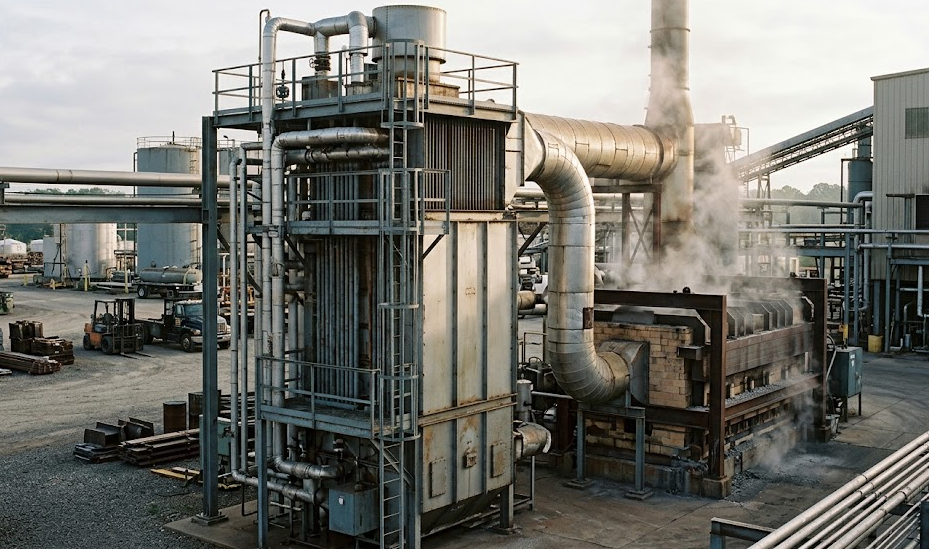
Non-ferrous metal production involves high-temperature processing, material handling, and supporting utility systems. These operations require substantial energy, making thermal efficiency an important consideration for smelting plant operators.
Depending on the furnace and process configuration, hot exhaust gas may provide an opportunity to recover energy through a waste heat boiler. The recovered heat can generate steam for suitable plant utilities or other applications supported by the facility's energy system.
The actual benefit depends on gas temperature, flow rate, operating hours, and the amount of heat that can be recovered without interfering with the smelting process. A well-planned system should therefore begin with a detailed assessment of the existing process rather than relying on a standard boiler configuration.
Smelting exhaust gas may contain dust and entrained particles generated during material processing. If these particles accumulate on heat-transfer surfaces, they can reduce heat transfer, increase gas-side resistance, and raise maintenance requirements.
The boiler design should account for the gas composition, particle characteristics, temperature range, and expected operating conditions. Depending on the process, engineers may need to evaluate gas cleaning, cleaning access, erosion protection, and appropriate heat-transfer surface arrangements.
These measures help maintain performance and reduce the risk of unplanned shutdowns.
Extracting more heat is not always the best operating strategy. Excessive cooling may affect downstream equipment or create condensation risks if the gas contains moisture or corrosive components.
Engineers must determine an appropriate outlet temperature based on the gas chemistry, downstream process requirements, and applicable corrosion limits. Where condensation is possible, the relevant dew point and material compatibility require particular attention.
A properly designed tin smelting waste heat recovery boiler should recover useful energy while maintaining safe and stable conditions throughout the process.
Recovered heat has greater practical value when the generated steam can be used consistently. Before selecting an energy saving tin smelting boiler, plant operators should review their steam consumption, required pressure, operating schedules, and seasonal demand variations.
If steam generation does not align with plant requirements, the project may need changes to the utility network or an alternative arrangement for using the recovered energy. Matching heat availability with real demand helps improve project economics and avoid underutilized equipment.
A reliable selection process should consider the entire installation rather than the boiler alone.
First, collect operating data covering gas flow, inlet temperature, dust loading, gas composition, and variations in production. These parameters establish the available heat and help identify potential operating risks.
Next, define the required steam output and operating pressure. The design should reflect actual demand, not simply maximize nominal boiler capacity.
Finally, evaluate maintenance access, inspection requirements, control systems, pressure protection, and integration with existing equipment. These factors influence equipment availability and long-term operating costs.
Economic analysis should also include installation, auxiliary equipment, maintenance, and any changes required to the existing process. Rather than assuming a fixed energy-saving percentage, calculate the expected benefit using measured operating data and realistic utilization assumptions.
Hailu Heavy Industry provides industrial waste heat boiler and heat recovery engineering solutions for applications across sectors including metallurgy, petroleum, and chemical processing. Its business covers equipment design and manufacturing, as well as engineering, installation, commissioning, and broader waste heat recovery project services.
For tin smelting operators evaluating heat recovery, Hailu Heavy Industry can be a starting point for discussing project-specific requirements. The proposed configuration should be assessed against actual furnace conditions, gas characteristics, steam demand, and site constraints.
Learn more about its capabilities through the Hailu Heavy Industry engineering and solutions page.
An energy saving tin smelting boiler can help recover useful thermal energy from suitable high-temperature process gas. Its effectiveness depends on appropriate engineering, control of dust and corrosion risks, and integration with the plant's steam requirements.
By analyzing process conditions and total project costs before equipment selection, tin producers can make better-informed decisions about waste heat recovery. A system designed around real operating needs can support improved energy utilization, reliable production, and more effective long-term resource management.