


Stock Code
002255




Nickel smelting is a high-temperature process that produces large amounts of hot furnace gas. If this heat is released directly into the downstream system, a significant amount of useful energy can be lost. A Nickel Smelting Waste Heat Boiler provides an effective way to recover part of this energy by transferring heat from furnace gas to water and generating useful steam.
For nickel smelting plants, however, waste heat recovery is not simply a matter of installing a boiler after the furnace. Gas temperature, flow rate, dust content, gas composition, steam requirements, and downstream equipment all affect the final design.
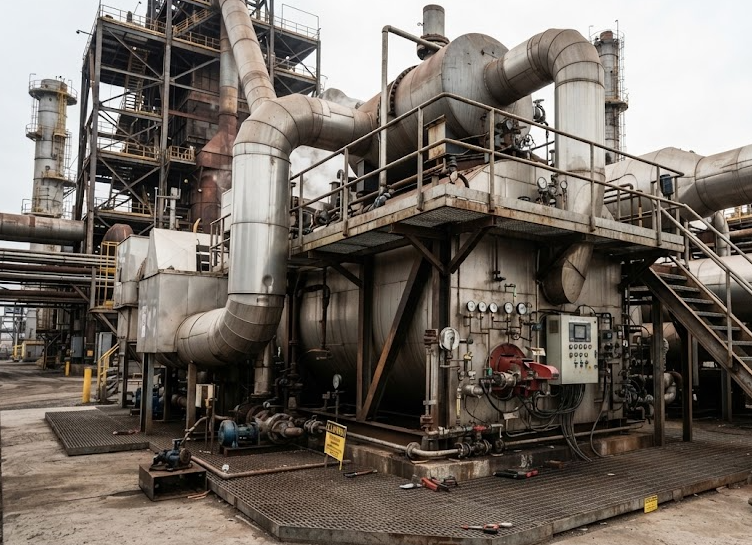
The basic principle is straightforward.
High-temperature furnace gas enters the waste heat boiler and passes over heat-transfer surfaces. Feedwater absorbs the heat and is converted into steam, while the furnace gas leaves the boiler at a lower temperature.
The recovered steam can then be used for process heating, power generation, or other plant utility needs.
In this way, a Nickel Smelting Waste Heat Recovery Boiler connects the high-temperature smelting process with the plant's steam system. Instead of allowing furnace heat to escape, the system converts part of that heat into useful energy.
The main challenge is that furnace gas is not always clean or stable.
Depending on the smelting process, the gas may contain dust and other particles. These materials can accumulate on heat-transfer surfaces and reduce heat-transfer performance. If abrasive particles move through the boiler at high velocity, they can also cause erosion in exposed areas.
Gas composition is another important consideration. Certain components may create corrosion risks under unsuitable operating conditions. At the same time, large temperature changes during operation can create additional thermal stress.
Therefore, an Energy Efficient Nickel Smelting Waste Heat Boiler needs to balance heat recovery with long-term operating reliability.
The normal, minimum, and maximum gas temperatures should all be considered during design. Gas flow may also change with furnace production and operating conditions.
A boiler designed around only one operating point may not provide stable performance when the furnace load changes. Understanding the actual operating range is therefore an important first step in designing a Waste Heat Boiler for Nickel Smelting.
Dust accumulation is one of the common challenges in industrial waste heat recovery. Deposits on heat-transfer surfaces can reduce heat transfer and increase cleaning requirements.
If the gas contains abrasive particles, erosion must also be considered. Tube arrangement, gas-flow distribution, cleaning methods, and protective measures may all influence the service life of the boiler.
For a Nickel Smelting Furnace Gas Waste Heat Recovery system, these details are particularly important because stable heat transfer is essential for continuous operation.
Recovered heat is useful only when it matches the plant's actual steam demand.
Before selecting a Nickel Furnace Waste Heat Boiler, operators should determine the required steam production, pressure, temperature, and operating schedule. The boiler can then be designed to match the available furnace heat with the required steam conditions.
This approach is generally more practical than selecting equipment based only on the furnace size.
Waste heat boilers operate under significant temperature differences. Startup, shutdown, and changes in furnace production can create repeated thermal expansion and contraction.
The boiler structure and heat-transfer components therefore need to accommodate these temperature changes. Proper consideration of thermal expansion can help reduce unnecessary stress and support reliable long-term operation.
It may seem logical to cool furnace gas as much as possible, but maximum heat extraction is not necessarily the best solution.
The outlet gas temperature must also meet the requirements of downstream dust collection, gas treatment, and other equipment. Excessive cooling may create condensation or other operating problems depending on the gas composition and process conditions.
An efficient Nickel Smelting Heat Recovery System should therefore balance several factors: heat recovery, steam production, gas outlet temperature, downstream requirements, and equipment reliability.
The objective is not simply to recover the most heat possible, but to recover useful heat under stable and practical operating conditions.
There is no single standard High Temperature Nickel Smelting Waste Heat Boiler suitable for every smelting plant.
Different furnaces can produce different gas temperatures, flow rates, dust concentrations, and gas compositions. The available waste heat and required steam conditions can also vary considerably.
Hailu Heavy Industry provides waste heat and residual heat utilization solutions covering system design, installation, operation, and EPC services. Its waste heat boiler business serves multiple industrial sectors, including non-ferrous metal smelting.
For a nickel smelting project, important information should be provided before equipment selection, including furnace gas temperature and flow rate, gas composition, dust concentration, required steam pressure and production rate, operating conditions, and downstream gas-treatment requirements.
With these details, the waste heat boiler can be designed around the actual production process instead of relying on a generic configuration.
A well-designed Nickel Smelting Waste Heat Boiler can recover thermal energy that would otherwise be lost with hot furnace gas. However, the real value of the system comes from matching the boiler with the furnace, gas conditions, steam system, and downstream equipment.
For nickel smelting operations, the goal is not simply to recover more heat. It is to recover the right amount of heat safely and consistently while maintaining stable gas flow, reliable heat transfer, and long-term equipment performance.
With process-based engineering and suitable waste heat recovery technology, furnace gas can become a valuable source of useful steam rather than simply another source of heat loss.