


Stock Code
002255




In a coal gasification plant, a gasifier vessel operates under demanding conditions involving high temperatures, elevated pressure, corrosive gases, and solid particles. Any weakness in its design or manufacturing can lead to equipment damage, unexpected shutdowns, and costly maintenance. For plant owners and engineering contractors, selecting an industrial gasifier vessel is therefore not simply a matter of comparing specifications. The real challenge is finding equipment that can maintain safe, stable operation throughout its service life.
Understanding the major operating risks helps buyers make better equipment decisions and reduce long-term project costs.
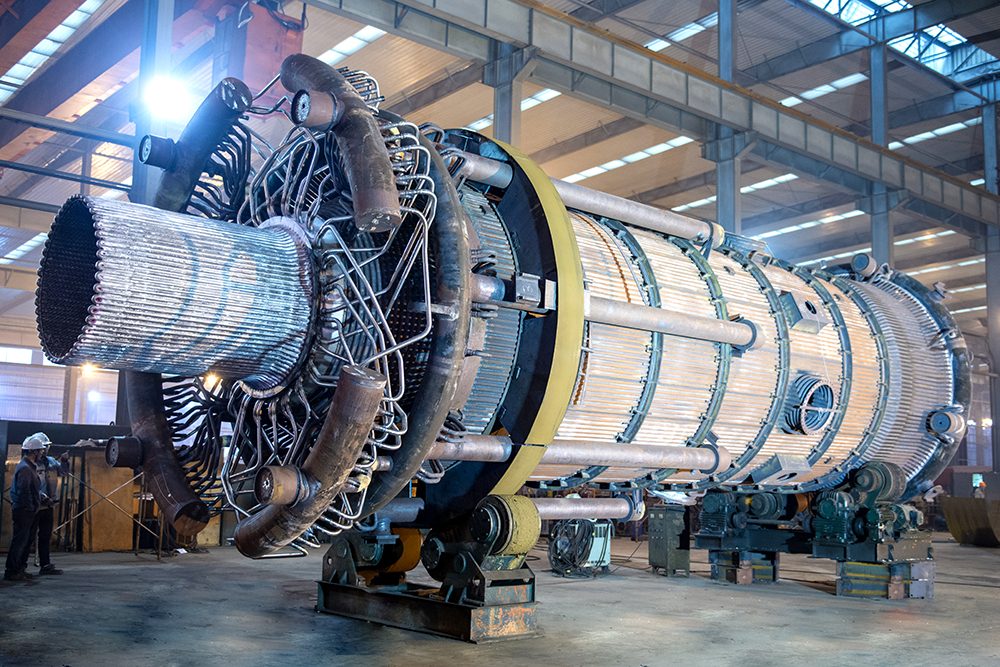
Gasifier vessels are exposed to multiple forms of stress during continuous operation. High temperatures and pressure place significant demands on the pressure boundary, while thermal fluctuations can cause repeated expansion and contraction. Over time, these conditions may contribute to material fatigue, deformation, and cracking.
The internal environment creates additional challenges. Syngas, slag, ash, and other process materials may cause corrosion or erosion, depending on their composition, temperature, and flow conditions. Areas exposed to concentrated particle impact or aggressive chemical media can be particularly vulnerable.
For plant operators, equipment failure means more than repair expenses. It can interrupt upstream and downstream processes, affect production schedules, and increase safety risks. Buyers should therefore evaluate whether the vessel design considers actual operating conditions, including pressure, temperature, process media, thermal cycling, and expected service life.
Material selection is one of the most important factors affecting gasifier vessel reliability. A material suitable for one operating zone may not provide sufficient resistance in another because temperature, corrosion exposure, and mechanical stress can vary across the vessel.
Low-alloy pressure vessel steels are commonly considered for structural strength and high-temperature service. However, certain internal surfaces may require additional protection against corrosion and erosion. Depending on the process conditions, stainless steel or nickel-based alloy overlays can be applied to selected areas to improve resistance.
Buyers should avoid selecting materials based only on general specifications or initial purchase price. Instead, the material combination should be evaluated against the actual process medium, design temperature, pressure, and anticipated degradation mechanisms.
A suitable material strategy can help reduce premature damage, extend maintenance intervals, and improve equipment availability. It also requires close coordination between process engineers, vessel designers, and material specialists.
Even a well-designed gasifier vessel can become a reliability risk if manufacturing quality is inconsistent. Thick-wall pressure vessels require careful control of forming, welding, heat treatment, and dimensional accuracy.
Welding is particularly important because defects or excessive residual stress may affect the vessel's structural integrity. Manufacturers should establish qualified welding procedures, control preheating and post-weld heat treatment where required, and ensure that fabrication is carried out by qualified personnel.
Non-destructive examination, such as ultrasonic and radiographic testing where specified, helps identify potential internal or surface defects before equipment enters service. Pressure testing and final inspections are also essential parts of quality control.
For project owners, these manufacturing processes should not be treated as details that can be checked only at delivery. Reviewing the manufacturer's quality assurance procedures, inspection records, and relevant project experience can help identify risks earlier and reduce the possibility of costly rework or commissioning delays.
A gasifier does not operate independently. Its performance is closely connected with supporting equipment, including syngas coolers, quench systems, and slag or ash handling equipment.
If these components are not properly matched, operational problems may develop across the system. For example, unstable temperature control or inefficient slag removal can increase the operating burden on connected equipment and complicate maintenance.
When evaluating an industrial gasifier vessel, engineering contractors should therefore consider equipment interfaces, process requirements, maintenance access, and the operating conditions of connected systems. Clear technical coordination during the design stage can reduce installation difficulties and help avoid problems after commissioning.
Choosing a qualified manufacturer involves more than checking production capacity. Buyers should assess experience with comparable gasification processes, pressure vessel fabrication, material applications, quality control, and project delivery requirements.
Hailu Heavy Industry has manufactured more than 50 gasification units for different process technologies, including Shell, Siemens, KBR, and coal-water slurry gasification projects. Its pressure vessel experience includes applications involving materials such as SA387 Gr.11 Cl.2, stainless steel overlay, and Incoloy 825 in specific project configurations.
This project experience provides a practical basis for understanding the engineering and manufacturing challenges associated with demanding gasification environments. For buyers, working with a manufacturer familiar with different process requirements can support more effective technical communication and equipment selection.
The cost of an industrial gasifier vessel should be evaluated beyond its initial purchase price. Material degradation, unplanned shutdowns, maintenance requirements, and equipment integration can all influence the total cost of ownership.
By examining operating conditions, material suitability, manufacturing quality, and supplier experience before placing an order, project owners can make more informed decisions. A reliable gasifier vessel is not defined by pressure resistance alone, but by how well its design and manufacturing support safe, stable, and long-term plant operation.