

Stock Code
002255




Fusion energy is advancing toward new engineering milestones, but developing a reliable fusion reactor involves far more than controlling high-temperature plasma. Supporting systems must maintain stable cooling conditions, protect superconducting magnets, and withstand demanding thermal and mechanical environments.
For fusion energy developers and engineering contractors, these requirements create significant challenges in equipment manufacturing. Pressure vessels, cooling system components, and cryogenic thermal shields must meet strict requirements for structural integrity, dimensional accuracy, material performance, and quality assurance.
As fusion projects become increasingly complex, selecting an experienced fusion reactor equipment manufacturer is essential to reducing fabrication risks and supporting reliable system integration.
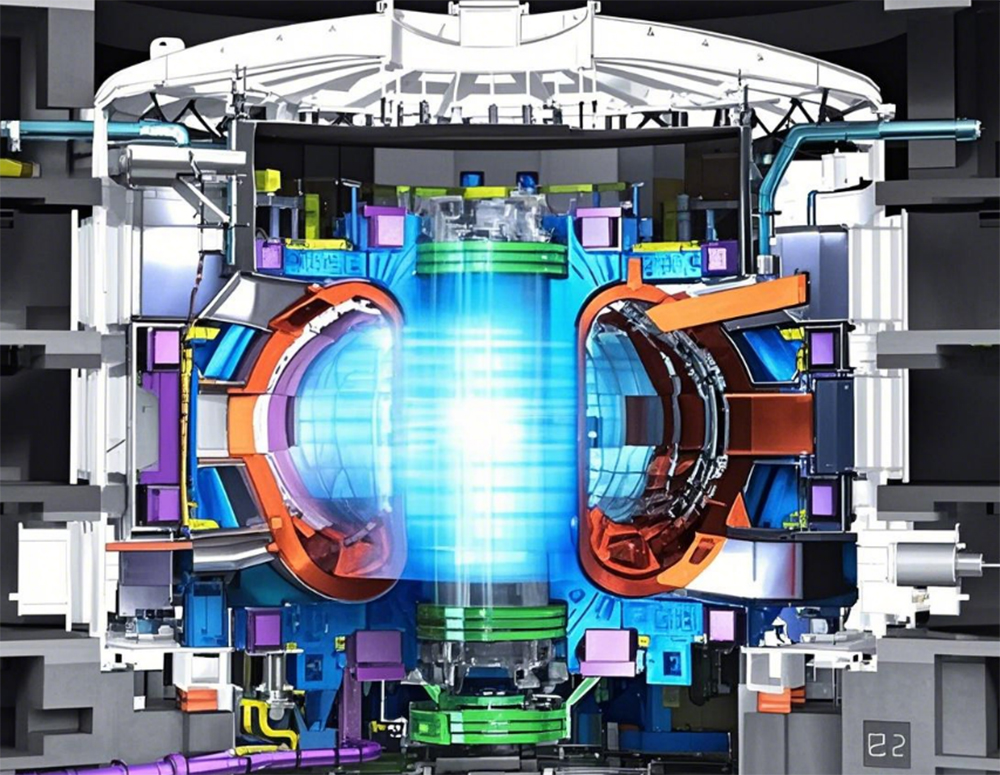
In tokamak fusion systems, cooling circuits remove heat from components exposed to intense thermal loads. Changes in coolant temperature and volume can affect system pressure, circulation conditions, and equipment stability.
If these variations are not properly accommodated, they may place additional demands on pumps, pipelines, and connected equipment.
A volume control tank helps manage coolant inventory changes and supports pressure stability within the cooling system. However, manufacturing such equipment requires more than conventional vessel fabrication.
Key considerations include operating pressure, temperature conditions, material compatibility, welding quality, heat treatment, and internal cleanliness. Thick-wall fabrication and dimensional control are particularly important because defects or deviations may complicate inspection and system integration.
For project owners, choosing a manufacturer with relevant pressure vessel experience can help address these challenges during the fabrication stage.
Superconducting magnets are essential to magnetic confinement, but they must operate at extremely low temperatures. Heat transferred from surrounding structures can increase cryogenic cooling demand and affect system performance.
Thermal shields help reduce radiative heat transfer between warmer components and cryogenic systems. Their manufacturing presents several challenges.
Complex curved geometries require precise forming and machining. Welding can introduce deformation, while dimensional deviations may complicate assembly and installation. Material selection must also consider thermal properties, mechanical behavior, and compatibility with low-temperature operating conditions.
For fusion reactor thermal shield manufacturing, controlling deformation and maintaining dimensional accuracy throughout production are therefore critical.
When sourcing fusion reactor components, project teams should look beyond production capacity and delivery schedules.
● Material traceability and quality control: Nuclear-related projects require clear material identification, inspection records, and documented manufacturing procedures. Material certificates and traceability systems help verify that components meet specified requirements.
● Welding and dimensional accuracy: Complex pressure vessels and curved structures require qualified welding procedures, controlled fabrication processes, and appropriate non-destructive testing. Dimensional inspection is equally important for components with demanding assembly tolerances.
● Manufacturing and project coordination: Fusion equipment often involves cooperation among designers, research organizations, contractors, and equipment suppliers. Manufacturers should be able to work with approved technical drawings, inspection plans, and project-specific quality requirements.
Evaluating these capabilities early can reduce rework, inspection delays, and integration problems.
Hailu Heavy Industry has participated in fusion-related equipment manufacturing through projects associated with ITER.
One example is the ITER Volume Control Tank, used in the tokamak cooling water system. Its functions include accommodating coolant volume changes and supporting pressure stability. Manufacturing involves demanding requirements for pressure vessel fabrication, thick-wall welding, heat treatment, and internal cleanliness.
Another example is the Central Cryopanel of the Vacuum Vessel. This component features a complex curved structure and requires careful control of forming, welding, assembly, and machining accuracy. Its manufacturing also involves considerations related to cryogenic operating conditions and thermal protection.
In addition to these fusion-related projects, Hailu Heavy Industry has experience manufacturing nuclear power equipment, including nuclear safety Class 2 and Class 3 pressure vessels and heat exchangers.
This background provides relevant manufacturing experience for engineering projects that require specialized pressure equipment, complex fabrication, and documented quality management.
The development of fusion energy depends on the reliability of the supporting equipment as much as the performance of the reactor core. Cooling stability, thermal shielding, structural integrity, and manufacturing quality all influence system integration.
For project developers, the right manufacturing partner should understand the specific requirements of each component rather than simply offer standard industrial equipment.
With experience in nuclear-related equipment and ITER-associated manufacturing projects, Hailu Heavy Industry provides fabrication capabilities for specialized fusion-related components. Working with an experienced manufacturer can help project teams manage complex production requirements and support the continued development of fusion energy infrastructure.