


Stock Code
002255




Non-ferrous metal production consumes substantial energy, particularly during copper, nickel, lead, zinc, and tin smelting. These processes generate large volumes of high-temperature exhaust gas, creating opportunities to recover thermal energy and convert it into useful steam.
However, recovering heat from metallurgical exhaust gas is more complicated than installing a conventional industrial boiler. High dust concentrations, corrosive compounds, fluctuating gas temperatures, and demanding operating conditions can affect heat transfer efficiency and equipment service life.
For smelting plants evaluating a non ferrous heat recovery boiler manufacturer, the priority should be finding an engineering solution that matches actual furnace conditions while maintaining reliable long-term operation.
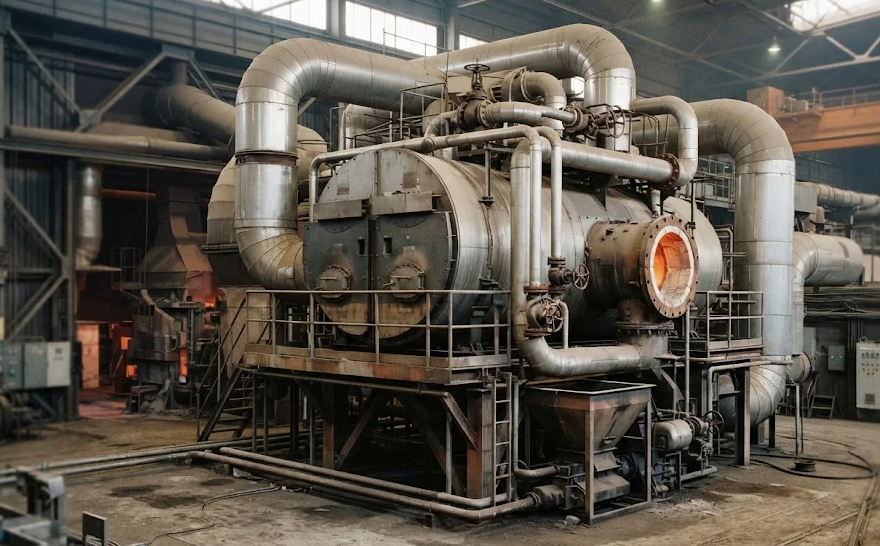
Different smelting processes produce different exhaust gas characteristics. Copper flash furnaces, converters, nickel smelting furnaces, and lead-zinc processing equipment vary in gas temperature, flow rate, dust concentration, and chemical composition.
These differences directly influence boiler structure, heat transfer surfaces, and circulation arrangements.
A boiler designed for one furnace type may not perform effectively under another process. Changes in raw materials, furnace operation, and production capacity can also affect the available waste heat.
Therefore, non-ferrous metallurgy waste heat boilers should be designed around specific process conditions rather than selected solely by rated steam output.
Metallurgical exhaust gas often contains fine particles that can accumulate on heat transfer surfaces. Excessive deposits reduce heat transfer efficiency and increase gas-side pressure drop. Boiler design should consider gas velocity, tube arrangement, dust characteristics, and cleaning accessibility to reduce fouling-related downtime.
High-velocity dust particles can gradually wear boiler tubes, while sulfur-containing compounds, halides, and other exhaust gas components may create corrosion risks. Material selection and tube arrangement should be based on actual gas composition, temperature, and operating conditions rather than relying on material upgrades alone.
Furnace charging, tapping, and converter operations can cause changes in exhaust gas temperature and flow. These variations affect steam generation and thermal stress. A suitable boiler design must account for normal operating conditions as well as expected fluctuations.
High heat loads require effective cooling of boiler heating surfaces. Poor circulation may cause local overheating and damage pressure components. Forced-circulation systems are used in many metallurgical waste heat recovery applications, with circulation arrangements engineered according to heat absorption, hydraulic resistance, and operating pressure.
When selecting a non ferrous heat recovery boiler manufacturer, buyers should evaluate more than equipment capacity and steam pressure.
● Process engineering experience: The manufacturer should understand different smelting processes, including flash smelting, converting, and other non-ferrous furnace applications.
● Thermal and hydraulic design: Heat transfer area, steam output, circulation flow, and gas-side resistance must be considered together.
● Dust management: Tube arrangements, cleaning methods, inspection access, and maintenance requirements should reflect actual exhaust gas conditions.
● System integration: Boiler outlet temperature and pressure drop must match downstream dust collection and gas treatment equipment.
● Manufacturing and project capability: Pressure-part fabrication, quality control, installation, commissioning, and technical support are important indicators of project reliability.
A well-matched system can help recover more useful energy without creating unnecessary operating or maintenance difficulties.
Hailu Heavy Industry provides industrial waste heat boiler solutions for non-ferrous metal production, including copper, nickel, lead-zinc, and tin smelting applications.
Its product range covers different furnace-related requirements, such as copper smelting waste heat boilers, converter waste heat boilers, nickel smelting waste heat boilers, and lead-zinc smelting waste heat boilers.
Published project references include an 86 t/h converter waste heat recovery boiler operating at 5.6 MPa for an Indian copper smelting project and a 41 t/h flash smelting furnace waste heat boiler operating at 6 MPa for a project in Indonesia.
These applications demonstrate why boiler configurations should be matched to individual furnace conditions rather than based on a standard design alone.
Beyond equipment manufacturing, Hailu Heavy Industry provides engineering services covering system design, installation, operation, and EPC project solutions. This capability helps customers consider boiler performance alongside existing smelting and gas treatment systems.
For non-ferrous metal producers, waste heat recovery should be evaluated as part of the overall production process.
A properly designed heat recovery boiler can convert furnace exhaust heat into useful steam for plant operations or other suitable applications. However, the best solution is not necessarily the equipment with the highest nominal output. It is the system that balances energy recovery, operating stability, maintenance requirements, and integration with the production line.
Working with an experienced non ferrous heat recovery boiler manufacturer such as Hailu Heavy Industry helps smelting plants evaluate these factors from the engineering design stage and select equipment suited to their actual operating conditions.