

Pressurized Water Reactor (PWR)
The purpose of a fusion reactor is to design and construct a controllable "artificial sun" based on the principle of nuclear fusion inside the sun, in order to solve the human energy crisis.
The light and heat of the sun come from the energy released by the two siblings of hydrogen - the isotopes deuterium and tritium - during their coalescence into a helium atom.
The 'artificial sun' imitates this process and brings a continuous stream of clean energy through controllable thermonuclear fusion. At present, human nuclear power plants use "nuclear fission" energy. The energy released by nuclear fusion is greater than that of nuclear fission, and its environmental problems such as radioactive pollution are also fewer. The nuclear fusion reaction of deuterium and tritium, whose raw materials are directly taken from seawater and the source is almost inexhaustible, is an ideal way to obtain energy and is regarded as the ultimate solution to meet human energy needs.
Cooperation Cases
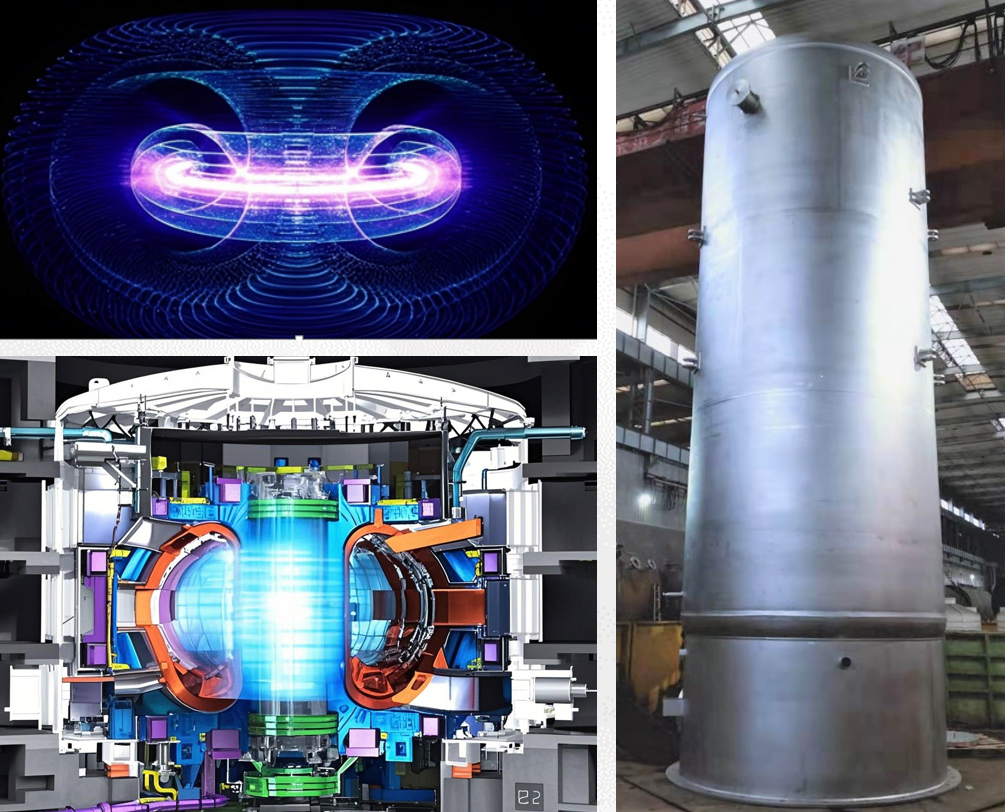
ITER—Volume Control Tank
The International Thermonuclear Experimental Reactor (ITER) stands as one of the most ambitious and complex international scientific collaboration projects in the world. It is a massive joint venture funded and supported by seven major members: China, the European Union, India, Japan, South Korea, Russia, and the United States—effectively encompassing the world's leading economies and scientific powers. As the largest and most influential international big science project to date, ITER represents a monumental endeavor in fusion energy research.
The Volume Control Tank is a core component of the ITER Tokamak cooling water system, which is responsible for removing the immense heat generated by plasma radiation and neutron bombardment from various tokamak components, such as the first wall, blanket, and divertor. Its functions include accommodating changes in coolant volume, maintaining system pressure stability, serving as the primary buffer vessel, and providing net positive suction head for the main circulation pumps. Key manufacturing challenges involve welding and heat treatment of thick-walled high-pressure vessels, as well as meeting extremely stringent requirements for internal surface cleanliness and finish.
Our company has successfully achieved the supply of this critical equipment.
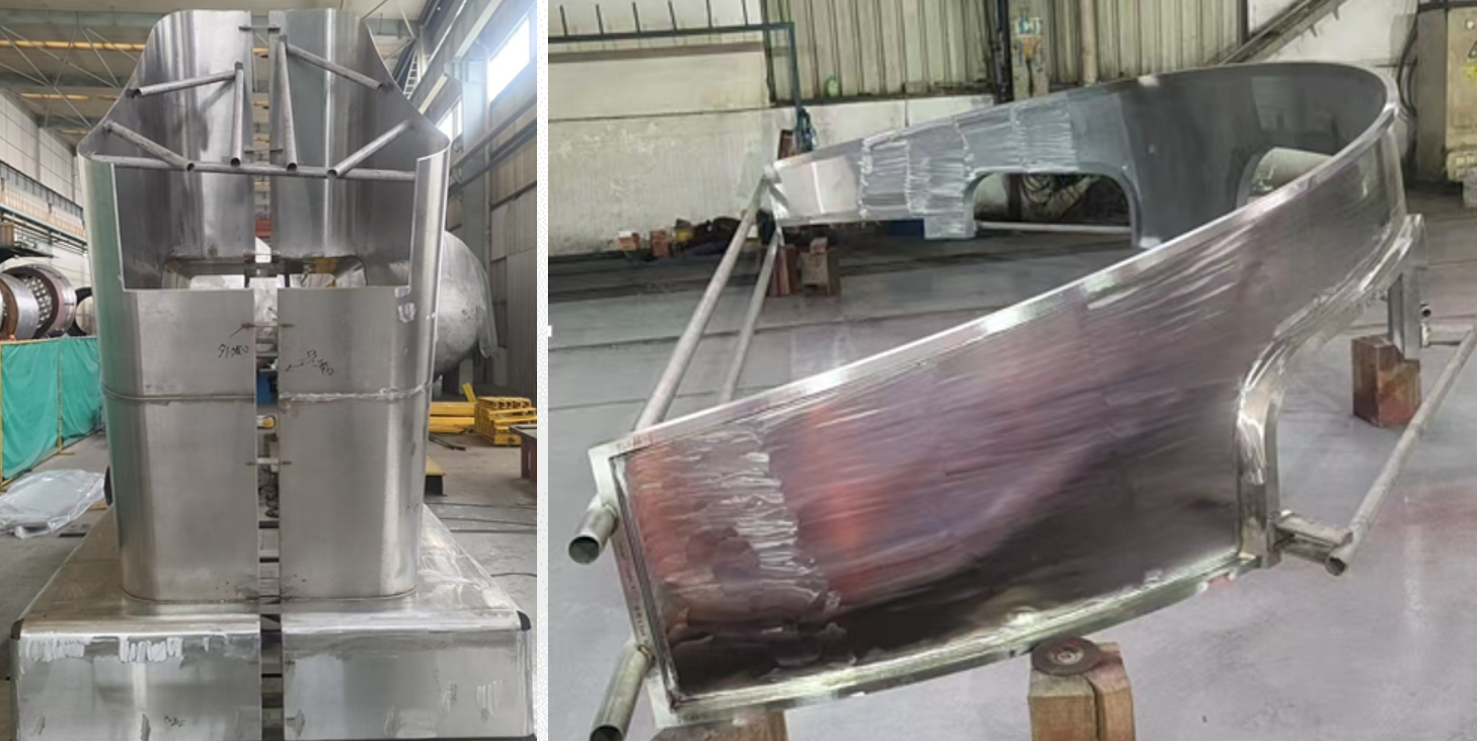
Central Cryopanel of Vacuum Vessel
The Vacuum Vessel Mid-Plane Thermal Shield is a large cryothermal insulation barrier installed inside the tokamak vacuum vessel, positioned between the plasma and the superconducting magnets. Featuring a complex three-dimensional curved D-shaped shell structure, it imposes extremely demanding requirements on material cryogenic performance, high-precision shaping of complex curved structures, as well as welding, assembly, and machining processes.