


Stock Code
002255




In petroleum refining, choosing an FCC waste heat boiler is not a routine equipment decision. It directly affects heat recovery efficiency, steam balance, operating stability, and how well the catalytic cracking unit fits into the refinery’s broader utility system. Hailu Heavy Industry’s FCC product page places this equipment within a wider waste heat and residual heat utilization business that includes system solutions, design, installation, operation support, and EPC delivery of complete waste heat recovery equipment.
A refinery may use the same general term, “FCC waste heat boiler,” but actual project requirements can vary a great deal. Steam pressure, steam temperature, circulation method, unit capacity, flue gas condition, and plant layout all influence what kind of boiler is suitable. On Hailu’s page alone, reference FCC and related catalytic cracking projects range from small units to very large projects, with evaporation capacities from a few tons per hour to 205 t/h, steam pressures from about 1.27 MPa to 9.8 MPa, and both natural and forced circulation designs.
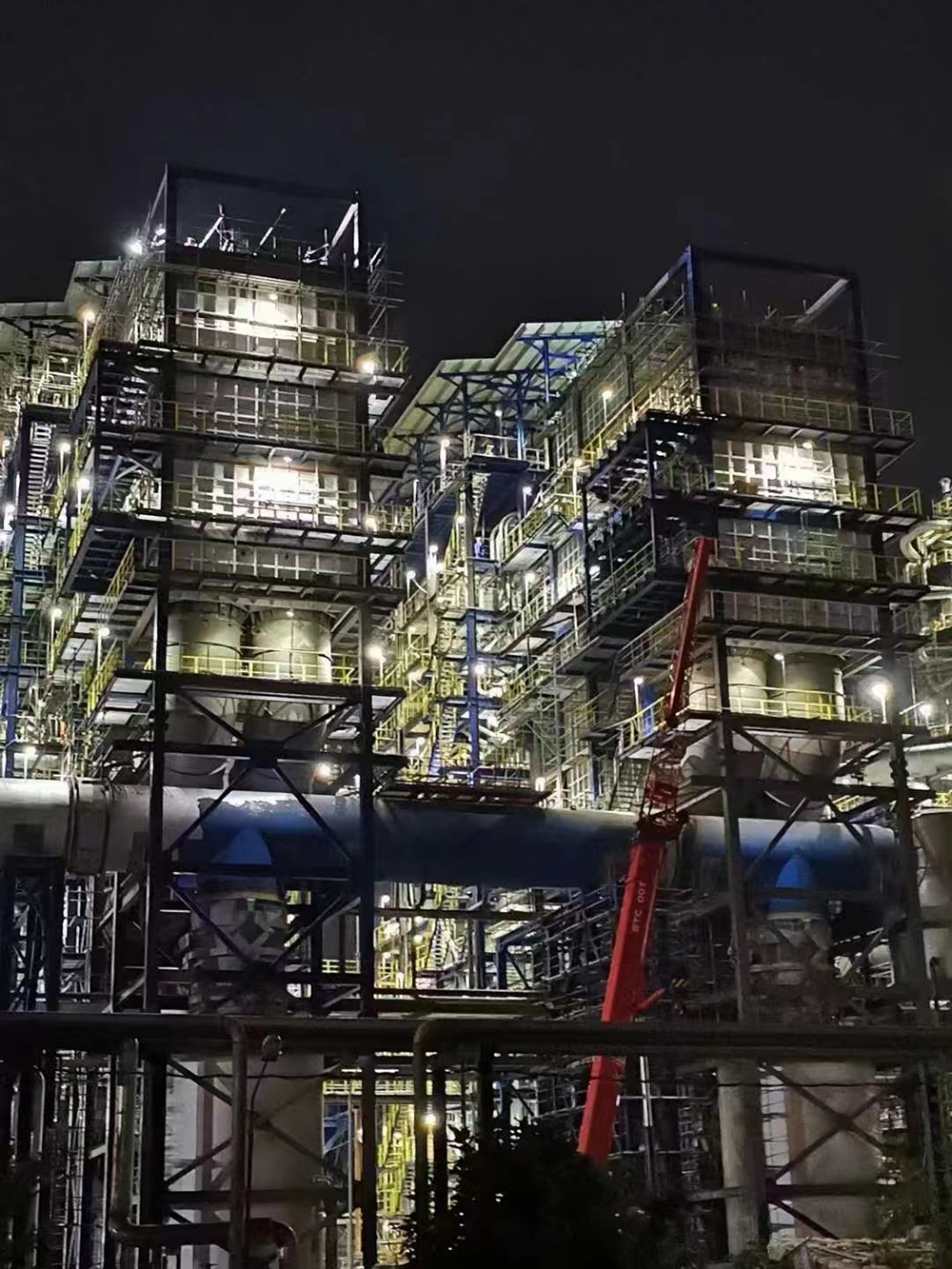
The first mistake many buyers make is looking at the boiler as an isolated product. In refinery practice, the FCC waste heat boiler is tied to the cracking unit, the steam network, flue gas conditions, and the site’s overall energy recovery target. That is why selection should begin with process conditions: gas source, temperature range, target steam parameters, continuity of operation, and how recovered steam will actually be used in the plant. The Hailu page repeatedly describes FCC and catalytic cracking applications in terms of energy recovery from high-temperature flue gas generated by heavy oil catalytic cracking units, which is the right starting point for selection logic.
For example, if the project objective is simply to capture usable steam from FCC flue gas, the selection path may differ from a project where the boiler must also support tighter utility integration or a higher-pressure steam network. A buyer should therefore define not only “what boiler is needed,” but “what the recovered energy must do” inside the refinery.
A good FCC waste heat boiler should be selected based on real operating conditions rather than a generic capacity label. Hailu’s project list shows how different FCC and DCC projects require different pressure and temperature combinations. Some operate around 3.82 MPa and 420°C, while others reach 4.5/9.8 MPa and 420/540°C, and some deep catalytic cracking projects use 9.5 MPa and 520°C.
That matters because pressure and temperature influence the boiler’s structure, materials, circulation choice, and downstream usefulness of the steam. If the selected boiler is oversized, underspecified, or poorly matched to the steam system, the refinery may not gain the efficiency improvement it expected. In refinery procurement, “right size” is not only about t/h capacity. It is about how well the steam output fits real plant demand.
Another important dimension is circulation type. Hailu’s FCC references show both natural circulation and forced circulation designs, with natural circulation appearing frequently in many recent large refinery projects. The page also describes major showcase cases as natural circulation systems operating under slightly positive pressure.
From a project perspective, circulation choice is not a minor technical note. It affects stability, design complexity, operating philosophy, and suitability under different thermal loads. In practical terms, buyers should ask whether the proposed circulation method matches the refinery’s operating pattern, maintenance resources, and process conditions. A supplier with broad FCC project history is usually in a better position to recommend the right route than one offering only a standard boiler template.
FCC waste heat boiler selection is also a structural decision. The Hailu page highlights several structural approaches, including modular design and a single-drum π-type waste heat boiler. It also outlines the historical evolution of refinery catalytic CO waste heat boilers from early drum-type designs, to modular design with separated combustion chamber and waste heat boiler modules, and then to π-type design with the combustion chamber integrated into the boiler structure.
This is useful for buyers because structure affects more than fabrication. It also affects transportation, installation arrangement, project schedule, and how the boiler interfaces with the cracking unit. In some projects, modular design may support easier delivery and installation planning. In others, an integrated π-type structure may better suit performance or site constraints. A refinery project team should evaluate structure from both engineering and construction perspectives, not only thermal design.
A supplier may claim FCC experience, but the depth of that experience matters. One strong signal on the Hailu page is the performance list itself. It includes refinery and petrochemical references stretching from the early 1990s to 2024, with projects for Sinopec, PetroChina, Yangzi Petrochemical, Tianjin Petrochemical, Maoming Petrochemical, Hainan Petrochemical, and overseas users such as Khartoum Refinery and SORALCHIN in Algeria.
For buyers, this is important because FCC service is not a generic waste heat duty. Long project history suggests the manufacturer has encountered different process sizes, steam conditions, circulation types, and refinery layouts over time. That experience reduces risk in specification review, detail engineering, and troubleshooting during implementation.
In petroleum refining projects, buyers often need more than a single piece of equipment. Engineering coordination, installation guidance, commissioning support, and long-term operation service can be just as important as fabrication itself. Hailu’s site emphasizes not only manufacturing, but also support functions such as pre-sales support, installation guidance, debugging support, operation and maintenance support, spare parts service, and EPC capability for complete waste heat recovery systems.
This matters because FCC boiler selection is often tied to schedule risk and integration risk. A supplier with broader project support capability can usually contribute more effectively during design review and startup, especially when the project involves refinery upgrades, conversion projects, or tight handover deadlines.
Refinery buyers usually want a supplier that combines engineering depth with large-scale manufacturing capacity. Based on the company background you provided, Hailu Heavy Industry was founded in 1956, covers nearly 500,000 square meters, has 8 holding subsidiaries and one waste heat boiler research institute, and its “Hailu” waste heat boiler products serve more than 30 industries and are exported to more than 80 countries and regions with more than 500 users worldwide. Your background also notes the company’s R&D focus on waste heat recovery, waste heat utilization, and environmental protection technologies, along with national-level science and technology project participation.
For a petroleum refining project, this kind of background helps support buyer confidence for one reason: FCC waste heat boilers are rarely judged only by drawing quality. They are judged by whether the supplier can execute reliably across design, fabrication, delivery, and project coordination. When the unit is part of a larger refinery utility or conversion project, that execution capability becomes a selection factor in its own right.
A practical FCC waste heat boiler selection process usually comes down to several questions:
Is the boiler being selected around actual FCC flue gas conditions?
Can the proposed steam parameters match refinery utility demand?
Is natural or forced circulation more suitable for this project?
Does the structure fit the site layout and construction plan?
Has the supplier delivered comparable FCC or DCC projects before?
Can the supplier support EPC coordination, installation, and startup needs?
These questions sound simple, but they separate a paper-qualified supplier from a project-qualified one.
The right FCC waste heat boiler is not always the biggest unit, the highest-pressure unit, or the most complex structure. It is the one that best fits the refinery’s process load, steam requirements, construction conditions, and operating strategy. Hailu’s reference list makes this point indirectly: projects differ widely in evaporation capacity, pressure, temperature, and circulation mode, which means real selection decisions are driven by application fit, not by a single standard model.
That is also why blog-level advice such as “choose a high-efficiency boiler” is not enough. In refining, the real work is in matching process reality to engineered equipment. A well-chosen Fluid Catalytic Cracking (FCC) Waste Heat Boiler supports stable heat recovery, practical steam utilization, and smoother integration into refinery operations. A poorly matched one may still run, but it will not deliver the same long-term value.
Choosing the right FCC waste heat boiler for a petroleum refining project means looking at the equipment from several angles at once: process conditions, steam targets, circulation type, structural layout, supplier experience, and project support capability. The strongest selection decisions are usually made when engineering, procurement, and operating teams evaluate the boiler as part of the refinery system rather than as a standalone product.
For companies looking for a supplier with long project history in catalytic cracking waste heat recovery, Hailu Heavy Industry’s FCC portfolio provides a useful reference point because it reflects different project scales, evolving design routes, and ongoing application in major refinery and petrochemical projects.