

Coke Dry Quenching Heat Recovery Boiler
China is home to more than 800 steel converters nationwide. After converter flue gas is cooled down to below 900°C via the evaporative cooling duct, it is conventionally further cooled by water spraying or water mist spraying. Currently, 60% of converters adopt the LT dry process while 40% apply the OG wet process; both methods waste the medium and low-temperature sensible heat resources of converters. Moreover, the flue gas in the pre-combustion and post-combustion stages is directly ignited and discharged, leading to substantial losses of gas chemical heat.
The converter sensible heat recovery technology replaces the traditional evaporative cooling process, enabling full recovery of waste heat across the entire temperature range of 1600°C to 200°C from converter flue gas. It achieves the mandatory energy-saving target of 30 kgce/t (kilogram of standard coal equivalent per ton of steel) for converters. This full dry sensible heat recovery technology successfully overcomes the global technical bottlenecks in converter flue gas waste heat recovery, which are caused by the gas’s flammability, high dust content and large temperature/flow fluctuations. It realizes fully dry dedusting and heat exchange for converter flue gas, completely abandoning the traditional Japanese OG method and German LT method that rely on water spraying or water mist cooling and dedusting processes. This innovative and transformative process delivers higher energy efficiency, lower carbon emissions and greater energy conservation.
After retrofitting the original LT dry process to the full dry system on the 100-ton No.6 and No.3 converters at Baotou Iron and Steel Group, the coal saving per ton of steel reached 7.58 kgce, with an annual standard coal saving of 7,580 tons per converter and an annual CO₂ emission reduction of 20,000 tons. The economic benefit per ton of steel stood at RMB 13.08, translating to an annual economic benefit of RMB 13.08 million per converter.
Following the same retrofitting from LT dry process to full dry system on the 200-ton No.3 converter at Shougang Jingtang United Iron and Steel, the economic benefit per ton of steel reached RMB 10.37, generating an annual economic benefit of RMB 23.85 million.
If all 800 converters in China were upgraded with this full dry sensible heat recovery technology, the steel industry would achieve an annual standard coal saving of 9.9 million tons, an annual CO₂ emission reduction of 26.25 million tons, and direct economic benefits exceeding tens of billions of RMB. This technology will fully replace the existing energy-intensive LT dry and OG wet processes, effectively helping steel enterprises cut costs and enhance efficiency, while boosting their green and low-carbon transformation.
Cooperation Cases
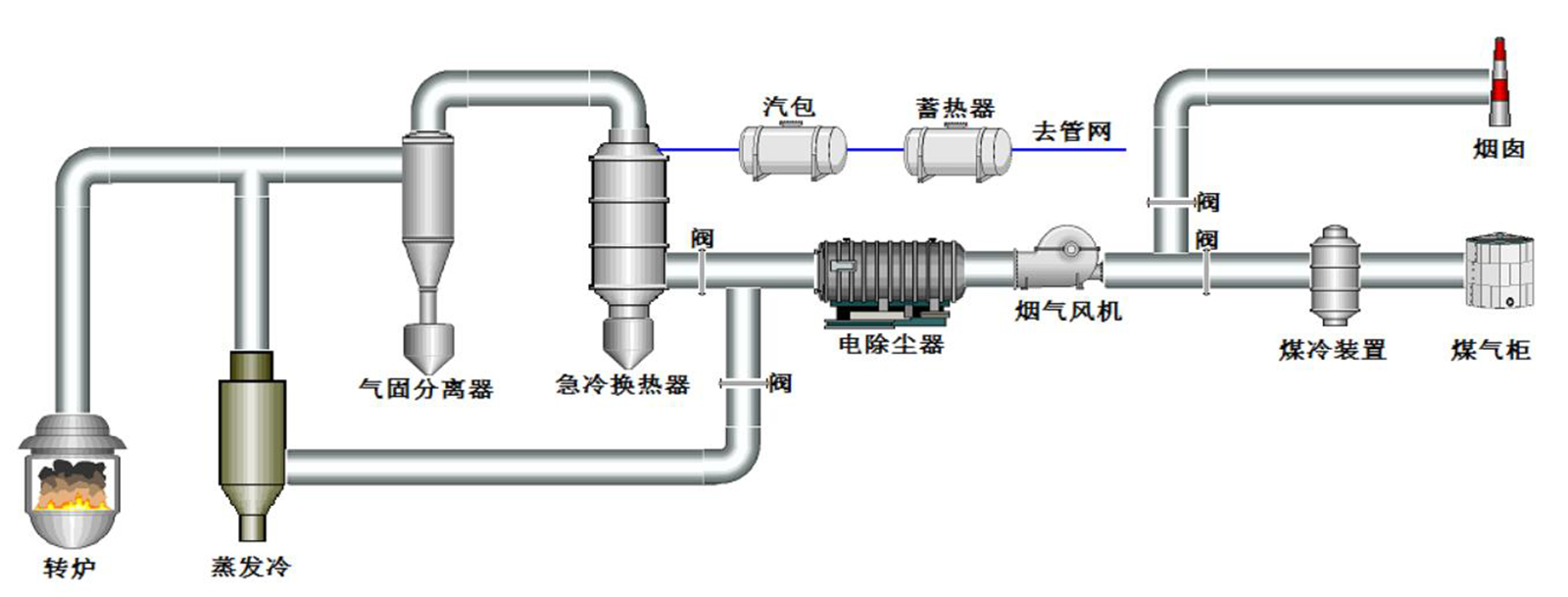
Baotou Steel Group 6# Converter: Retrofit Route from LT Dry Process to Full Dry Sensible Heat Recovery Process
The retrofit adopts a bypass flue design, with the original equipment retained to ensure uninterrupted production. Operational data over one year shows that the system achieves high dust removal efficiency, doubling the performance of the original EC system.
The process employs forced rapid cooling heat exchange technology—independently developed by the Institute of Mechanics and manufactured by Hailu Heavy Industry—leveraging professional expertise to deliver high heat transfer efficiency.
The entire system operates under negative pressure, demanding complete airtightness with zero leakage. Explosion relief devices are installed to release pressure in emergency situations.
The system features full-process ash clogging prevention design, ensuring stable pressure operation. An automatic ash cleaning mechanism maintains clean heat exchange surfaces, guarantees optimal heat transfer efficiency, and enables long-term stable operation.
A digital modeling system is integrated to adapt to the converter’s coupled operation conditions. With a compact and highly integrated design, the system occupies minimal space; adjustments can be made during retrofit to suit specific on-site requirements.
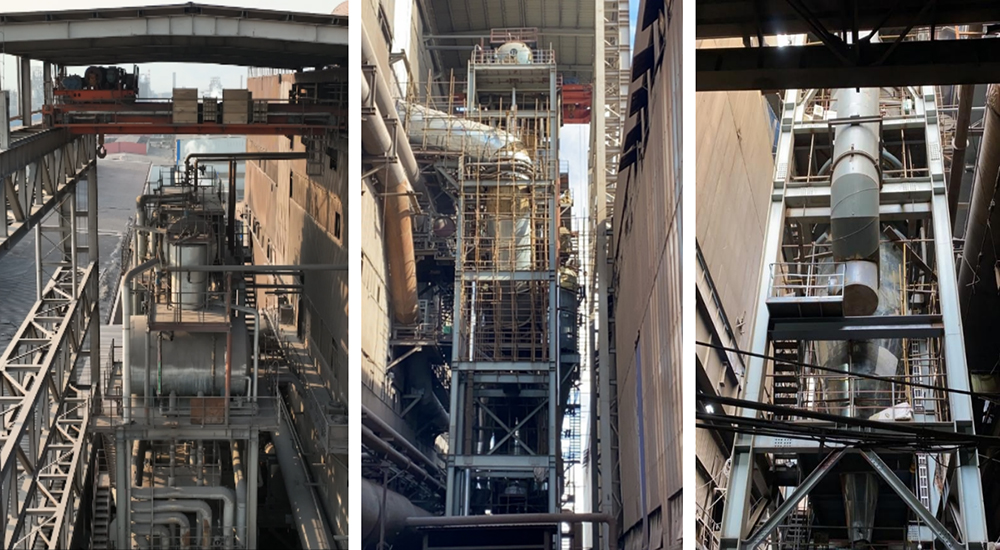
Baotou Steel Group 6# Converter (100t) Full Dry Sensible Heat Recovery System for Converter Gas
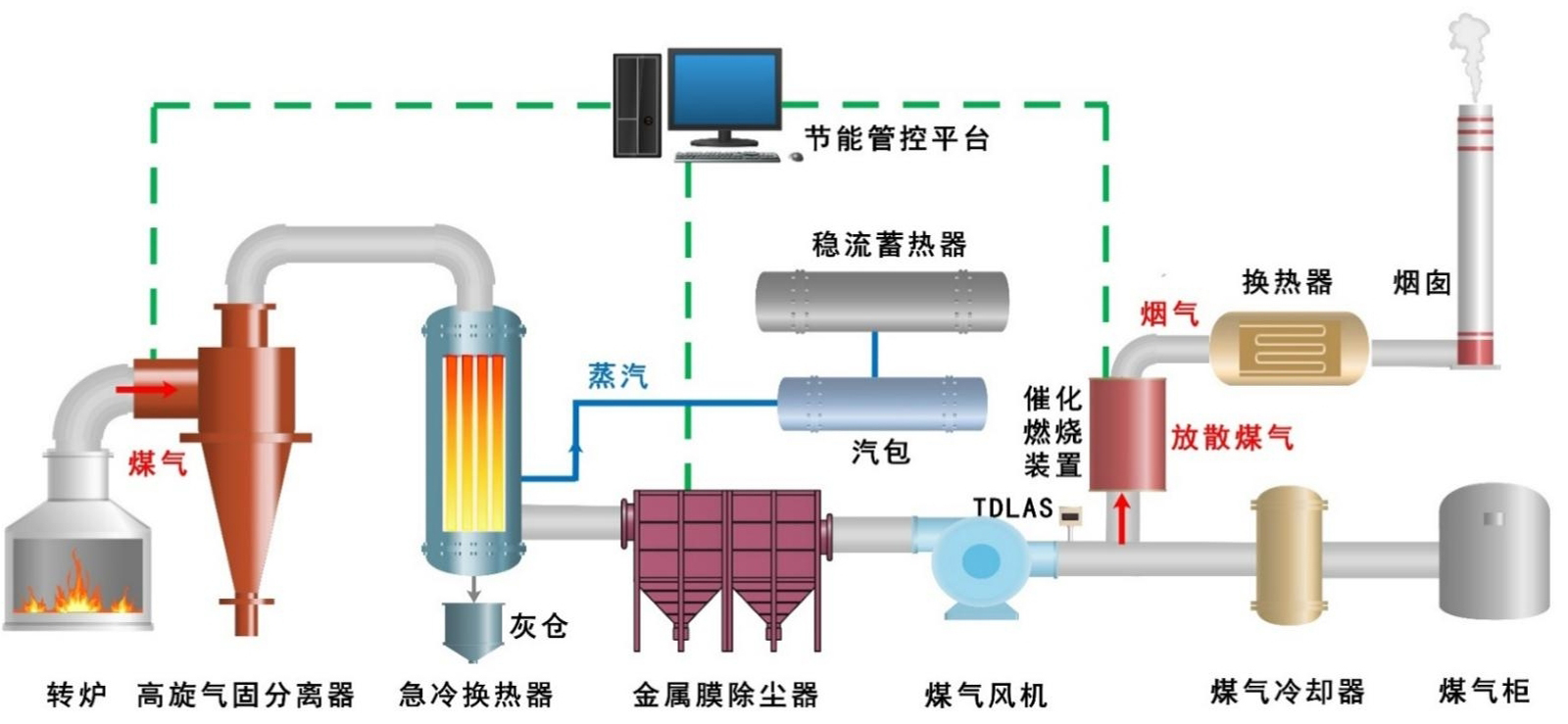
Baosteel Group's No.3 Converter: New Full Dry Process for Flue Gas Purification and Heat Recovery
After passing through the evaporative cooling duct, the converter gas enters the full sensible heat recovery system, where preliminary dust removal and high-efficiency sensible heat recovery are realized. The cooled and pre-dedusted gas then flows through a metal membrane dust removal system, enabling ultra-low particulate matter emissions. Instead of the conventional flare stack approach, the exhaust gas is treated via catalytic combustion technology, achieving near-zero CO emissions.